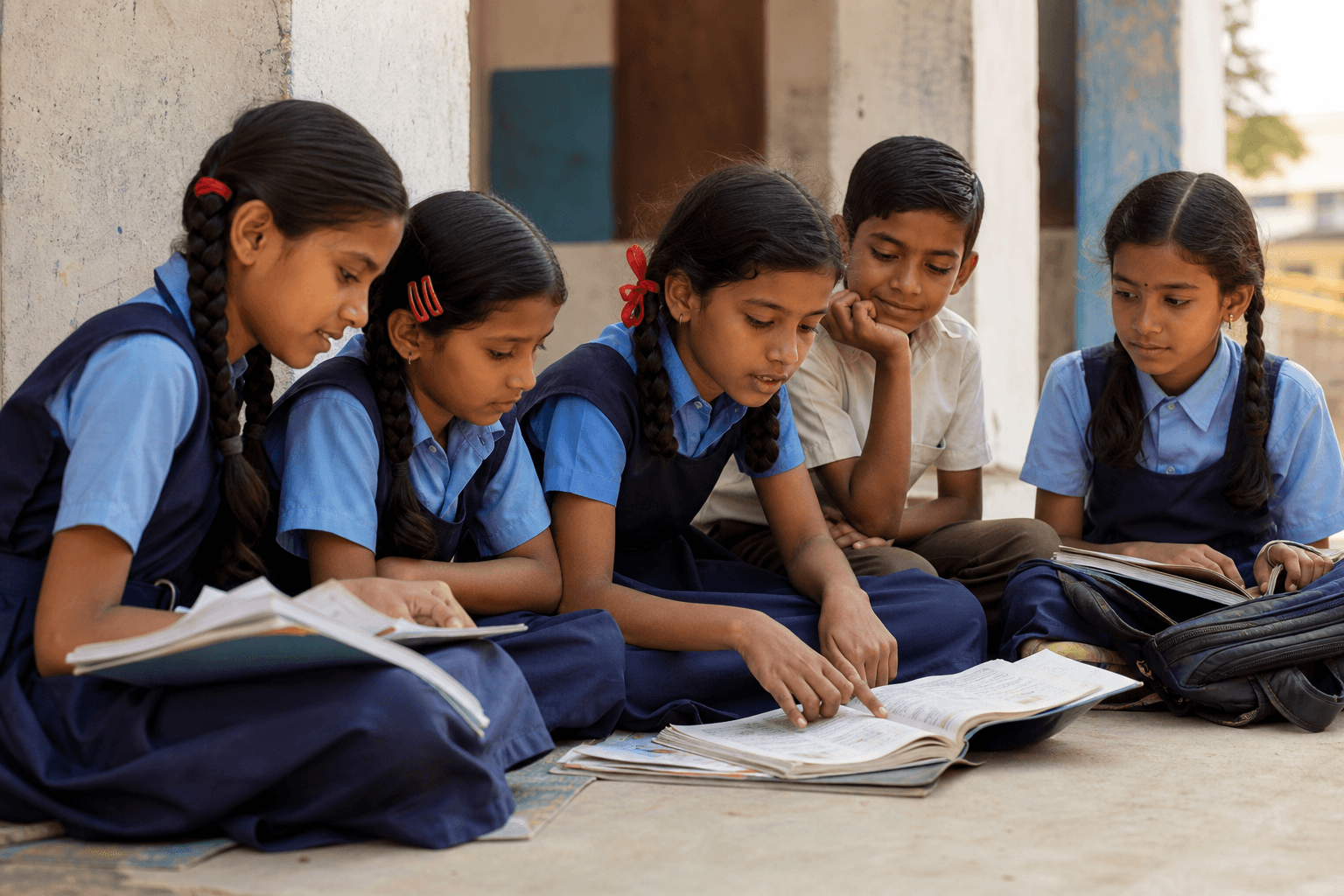
India has made major progress in getting children into classrooms. Yet enrolment alone does not guarantee learning. Across many states, children from low-income and rural families attend school regularly but still struggle with basic reading, writing, and arithmetic.
This learning gap — the difference between what children should know by a certain grade and what they actually know — is one of the most urgent challenges in Indian education today.
What the learning gap looks like
Surveys and classroom experience show a familiar pattern: many Class 5 students cannot read a Class 2 text fluently, and many struggle with simple division. The gap widens as children move up grades without mastering earlier skills.
For underprivileged children, the causes often stack together — irregular attendance due to household work, limited help at home, crowded classrooms, and fewer chances to practise after school.
Why it matters for India's future
When children fall behind early, they lose confidence. Over time, they may drop out, avoid higher studies, or enter adulthood without the skills needed for stable livelihoods. Closing the learning gap is not only about exams — it is about dignity, opportunity, and national development.
What actually helps
Practical support works: after-school tutoring, foundational literacy and numeracy programmes, mentoring, and access to books and digital learning. Community organisations and NGOs play a vital role where schools are overstretched.
At the Lata Agrawal Foundation, we support education programmes, learning centres, and free resources so children who start with fewer advantages can still catch up and thrive.