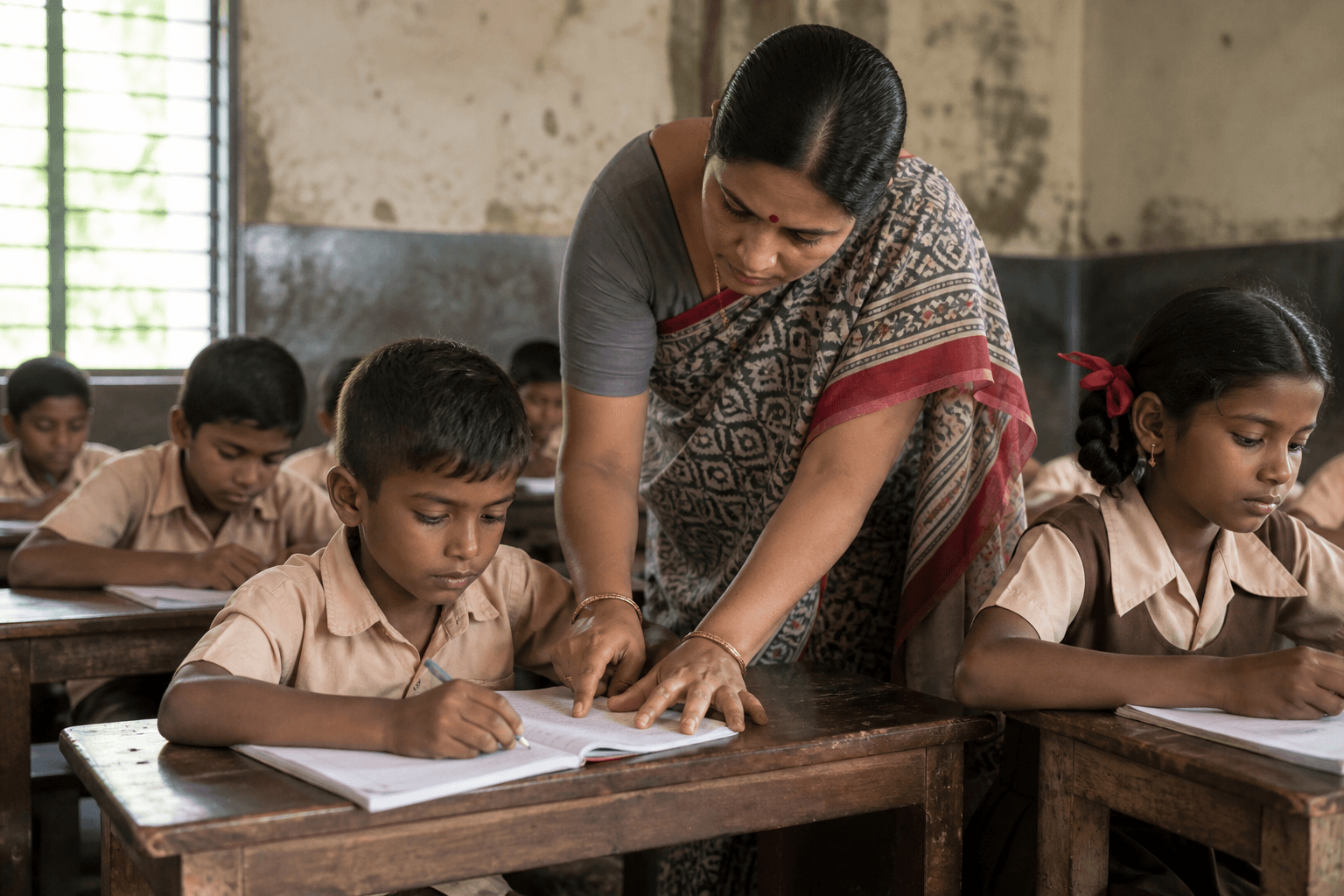
Most children in India study in government schools. These schools are the backbone of public education — and many dedicated teachers work hard every day under difficult conditions.
Still, large class sizes, mixed learning levels, and limited teaching aids mean many students leave the classroom with unfinished doubts. That is why after-school support can change outcomes for underprivileged learners.
The reality inside many classrooms
A teacher may be responsible for dozens of children at different learning levels. Revisiting basics for every child is not always possible in a single period. Homework help at home may also be limited if parents work long hours or have not had formal schooling themselves.
What after-school programmes provide
Community tuition, peer learning groups, computer labs, and mentoring sessions give children time to practise, ask questions, and build confidence. They also create a safe space where learning feels encouraging rather than stressful.
- Extra practice in reading, maths, and languages
- Digital literacy and STEM exposure
- Career guidance and soft skills
- Role models and mentors who believe in them
How communities can help
Schools, NGOs, volunteers, and local donors can partner to run after-school centres. Even a few hours a week of focused support can help a child keep pace with the curriculum.
LAF works with communities in Wardha and beyond to expand learning opportunities. Explore our free learning library or volunteer to mentor a student.